

Skip to content
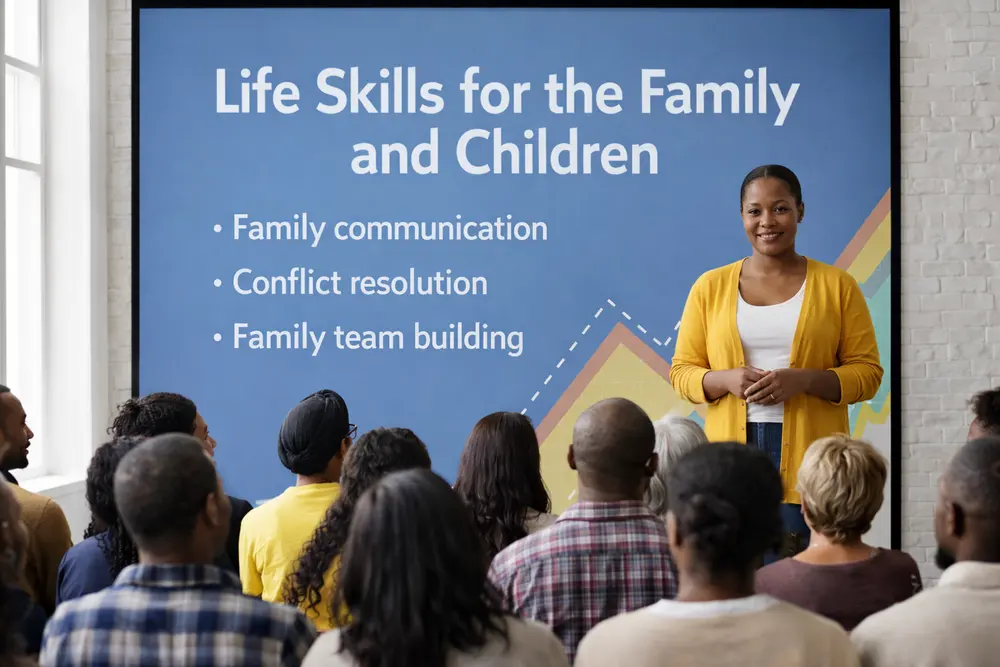
A facilitator presenting to a room of learners

Offering two

Train the people the sector cannot find.

Two occupational learnerships and a managed bursary pathway — the pipeline that staffs every Early Rise centre. Available as part of the investment, or entirely on its own.

01 Why it exists

A centre is only as good as the people in the room.

South Africa does not have a shortage of buildings that could be ECD centres. It has a shortage of qualified early childhood practitioners — and a second, quieter shortage of people who can fill a centre once it opens.

Early Rise trains both, in the same place, against real practice. The ECD learnership produces the practitioners. The sales assistant learnership, read as business development, produces the people who build the roll. The bursary pathway carries the strongest of them to a full teaching degree — which is what a centre needs before it can become a school.

For a funder with skills development to place, this is a pipeline with a workplace already attached.

A young learner writing at a classroom desk
02 The programmes

Two learnerships and a degree.

A practitioner leading a circle of pre-school children
Programme one

Occupational Certificate: Early Childhood Development Practitioner

  • SAQA ID 97542
  • NQF Level 4
  • 131 credits
  • QCTO · ETDP SETA

The qualification that makes an Early Rise centre possible. Learners are trained as ECD practitioners who can plan, deliver and assess early learning — and who can hold a room of small children with the confidence a private school brand is willing to put its name to.

This is the resource that empowers the ECD centres: every member of staff, executive and delivery alike, is a qualified practitioner who can stand in front of children.


Learners at a professional training session
Programme two

Occupational Certificate: Sales Assistant (General)

  • SAQA ID 99669
  • NQF Level 3
  • 54 credits
  • QCTO · W&RSETA

Read as a business development programme rather than a retail one. Its exit outcomes — attending to customers, building the relationship through service quality, executing the sale — are exactly the competencies an ECD centre needs to fill a roll and keep it full.

This becomes the business development training programme for the centres: enrolment, parent relationships, the affiliate programme, and the weekly seminar that fills the next term.

A practitioner supporting a learner at a desk
Programme three

Bursary management — Bachelor of Education, by distance

  • UNISA
  • Distance
  • Managed end to end
  • For centre staff

Full B.Ed bursaries for staff of an Early Rise centre, studied by distance through UNISA while they work. We manage the process: selection, registration, fees, materials, support and progression reporting.

This is the pathway that turns a centre into a school. A foundation phase needs qualified teachers before it needs a building, and they are trained inside the centre years before the phase opens.

Occupational qualifications are periodically re-registered, replaced or given teach-out periods by the QCTO. We confirm the registration status, the current qualification code, the intake dates and the entry requirements with the QCTO and the relevant SETA before every intake, and put them in writing before anyone commits. Where a qualification has been replaced, learners are enrolled on the current registered replacement.

03 How it runs
01

Candidates come from the community the centre serves

Recruitment runs through the OneAll Human Capital pipeline and through the centre itself — parents, siblings and neighbours of the children already enrolled. The people trained here have a reason to stay here.

02

Training is delivered against real practice

Learners train inside a working centre, mentored by an established private school brand, with practitioners who deliver the programme every day rather than describe it.

03

Work experience is the centre itself

The work-experience component of an occupational qualification is not a placement problem for us — it is the morning shift. Learners move from observing to assisting to delivering, under supervision throughout.

04

Absorption, not a certificate and a handshake

Each centre carries 8 learnerships from the day it opens, staffs itself from them, and supplies the next centre. Qualified practitioners who do not stay with us are the sector's gain — there is a national shortage of exactly these people.

04 What it does for the funder

Compliance is the floor, not the point.

Skills development on the scorecard

Learnerships are the substance of the skills development element — spend on black learners, absorption, and the training of the unemployed. Delivered against a real workplace rather than a classroom hired for the purpose.

Section 12H learnership allowances

Registered learnership agreements attract commencement and completion allowances under Section 12H of the Income Tax Act. What that recovers depends entirely on your own tax position, so we model it with you rather than publishing a percentage.

Appoint us as your SDF

Where it helps, we act as your skills development facilitator: WSP and ATR submissions, compliance in order, and grant applications that fund further training beyond the initial intake.

It works without the ESD investment

This offering stands alone. If you want the skills development without funding a centre, take the learnerships and the bursary programme on their own — the pipeline needs the volume either way.

05 The wider programme

Part of the OneAll learnership programme.

Early Rise draws its people from OneAll Human Capital, whose learnership programmes place trained support and service people into professional practices across South Africa — health practices through Practice Support and professional firms through Professional Support.

The ECD centres are the same method pointed at early education: the same candidate pipeline, the same eleven-step training discipline, the same insistence that a learner is only trained when they can do the work in front of a real client — here, a room of four year olds and their parents.

A professional training session in progress